
RunTime
HEAD OF ART → LEAD PRODUCER
2024–2025
An accessibility-focused endless runner designed around the Microsoft Adaptive Controller.
I began RunTime as Head of Art before taking over production, eventually leading a 15-person team across programming, design, art, and audio through final delivery.
15-person team · Unity · Microsoft Adaptive Controller · Trello
Taking Over Production
When I took over production, the game had its core loop, one background, one music track, and roughly 25% of its planned assets.
I reorganized priorities, assignments, and scope around one goal: finish the game we already had before adding more to it.
We cut or simplified mechanics whose technical or asset costs outweighed their value, set smaller weekly goals, and used regular team check-ins to catch blockers before they became larger dependencies.
By the end of the semester, the team had reached 90%+ asset completion with all five eras, an interactive tutorial, and a three-phase boss fight.
(Pictured: A portrait of the player character, drawn by me.)

AUG 2024
Head of Art
↓
JAN 2025
Lead Producer & Artist
↓
MAY 2025
Final Build
When I Took Over
(Month 4)

Final Build
(Month 8)

Problem 01
The scope was growing faster than the team could polish it.
I cut or simplified mechanics with high implementation costs and kept unused ideas in the backlog instead of forcing them into the final build.
Result: More time for integration, bug fixing, and polish.
Problem 02
Playtesters liked the core loop, but it became repetitive.
We used feedback to prioritize changes that added variety without rebuilding the game, including pacing adjustments, balance changes, and the three-phase boss fight.
Result: More replayability without abandoning the existing core.
Problem 03
New features affected multiple disciplines at once.
When the boss fight was added, I redistributed work so programming could expand the mechanic without creating an unsustainable asset load for art.
Result: Programming stayed productive while the art team remained within a realistic scope.


Keeping 15 People Moving
I broke larger milestones into weekly tasks, tracked ownership and dependencies, and checked in across disciplines throughout each sprint.
When work became blocked, overdue, or no longer supported the core experience, I reassigned it, changed the scope, or moved it to the backlog rather than letting it stall the rest of the project.
(Pictured: Screenshot of project tasks ordered by team and member on Miro. Screenshot of the backlog from the first half of the project.)
Playtesting Shaped Priorities
Playtesting exposed pacing problems, overpowered strategies, repetitive sections, bugs, and mechanics that interrupted the game's flow.
I used that feedback to help prioritize speed adjustments, balance changes, bug fixes, tutorial improvements, and replayability, focusing the team's remaining time on changes players would actually notice.
(Pictured: A Feedback Survey.)



Before I Led Production, I Led Art
Before moving into production, I led RunTime's four-person 2D art team.
I established the visual direction through an art bible, shared palette, brush and line standards, parallax specifications, and an approval pipeline so assets from multiple artists could still feel like they belonged in the same game.
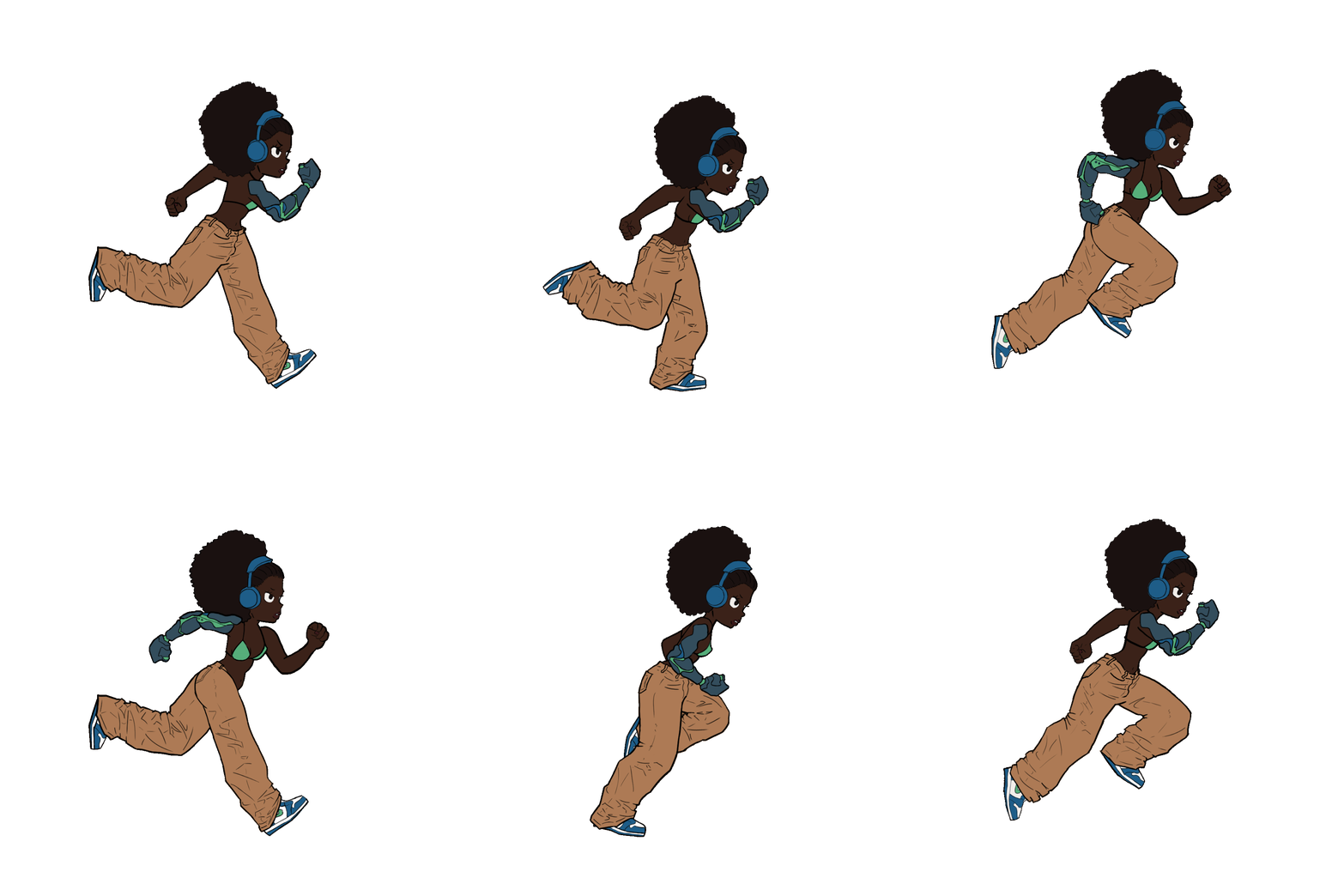
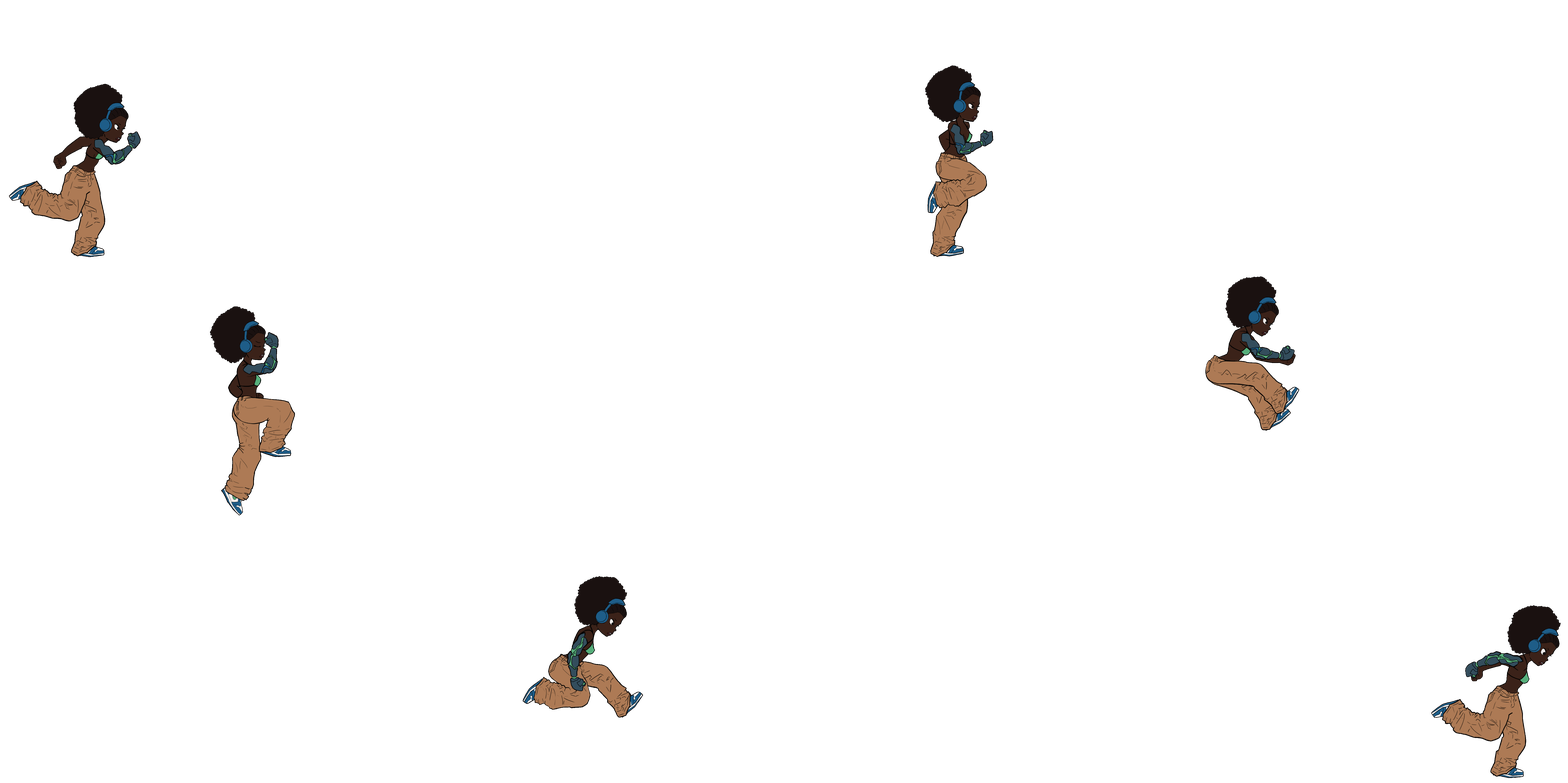
I also designed the player character and created character animation, layered environments, platforms, obstacles, and other game assets.
(Pictured: Player character run animation, Player character jump animation, both designed and drawn by me.)
Designed Around Four Inputs
RunTime was built around the Microsoft Adaptive Controller, using four primary inputs for jumping and color-coded obstacle interactions. That constraint shaped the game's mechanics, visual hierarchy, and decisions about complexity.


From Prototype to a Complete Experience
By the end of the semester, RunTime had all five eras, a tutorial, a three-phase boss fight, expanded audio and visual content, and extensive playtesting.
My biggest contribution was not any single feature. It was helping the team decide what was worth finishing, what needed to change, and what we could leave behind so the game could become a complete experience.
(Pictured: The completed tutorial level.)